
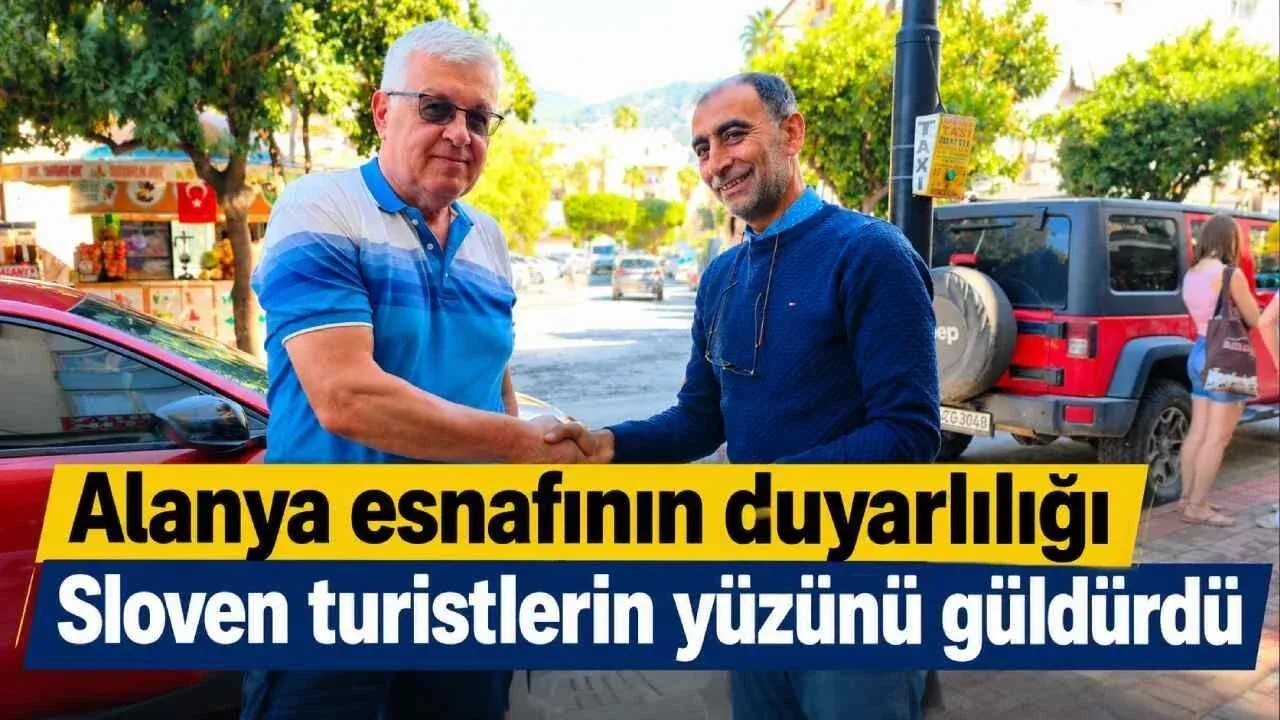
A Slovenian tourist couple who had lost their wallet in Alanya received the wallet and the money inside, which had been found by Mehmet Nezir Çoşkun, the owner of Family Giyim, in full at 11.00 am on 5 October. Çoşkun explained that he had found the wallet on the pavement in front of his shop at around 4.00 pm the previous day; as there was no identification inside, he used two museum tickets as a clue to track down the owners.
According to Çoşkun, the wallet contained foreign currency and Turkish lira. As he found no document identifying the owner, the shopkeeper informed the museum authorities, the Tourist Information Office and local shopkeepers. He asked that anyone looking for their wallet be directed to him.
A neighbouring shopkeeper directed the couple
The elderly Slovenian couple, realising their wallet was missing, went to nearby shops in the morning to report their loss. Upon learning of the situation, a neighbouring shopkeeper directed the tourists to Çoşkun’s shop and told them to come at 11.00.
The parties met at the specified time. After verifying their identities, the wallet, along with the money inside, was returned to its owners.
Çoşkun: “It should be standard and natural”
Mehmet Nezir Çoşkun, emphasising that what he had done should be seen as a normal act, said:
“There were no documents in the wallet, just two museum tickets. I informed my fellow shopkeepers and the authorities. As our neighbour was aware of the situation, he directed the tourists to us and we returned their belongings. In fact, this sort of behaviour should be standard and natural in our society. It should not be viewed as an extraordinary situation to boast about; it is a fundamental value our nation should possess. Nevertheless, seeing those elderly people reunited with their money made us very happy.”
The Slovenian couple also mentioned that they had travelled from Gaziantep to Alanya during their trip to Turkey. The tourists, who described losing their wallets as an unpleasant experience, thanked Mr Çoşkun and the Alanya shopkeepers who had helped them.